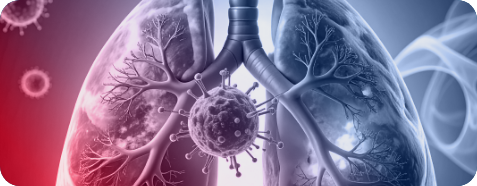

Therapy of Respiratory Diseases by Targeted Nanoparticles Delivering Small Molecules and Oligonucleotides

We have developed a proprietary nanoparticle platform designed to deliver drugs and nucleotides directly to lung tissue. Our lead particles and therapeutic payloads have demonstrated meaningful efficacy in preclinical animal models.
Contact About This Opportunity
Contact
Leah Langlais
Mgr, Venture Development , Tech Launch Arizona

The Problem

Lung endothelial cell dysfunction is a central driver of many severe acute and chronic pulmonary diseases, including pulmonary hypertension, viral and bacterial pneumonia, as well as pulmonary dysplasias. Despite the importance of the lung endothelium in disease progression, existing therapeutic approaches lack the ability to selectively target lung endothelial cells without significant off‑target exposure in other organs. Although several nanoparticle delivery systems have been developed to target endothelial cells broadly, none achieve specificity for the lung vasculature. This limitation is particularly acute in Acute Respiratory Distress Syndrome (ARDS), a life‑threatening condition characterized by vascular leakage and severe inflammation. Pediatric ARDS (PARDS) is associated with even higher mortality, driven by profound endothelial injury, yet remains poorly understood at the molecular level. The absence of lung‑specific endothelial targeting technologies has hindered both mechanistic insight and the development of effective therapies.

The Solution

Our platform combines targeted nanoparticle delivery with first‑in‑class molecular therapeutics to address severe, unmet needs in pediatric pulmonary disease. The technology leverages precisely engineered, proprietary nanoparticles to enable highly specific delivery to lung microvascular endothelial cells following intravenous administration, demonstrating strong selectivity, robust in vivo efficacy, and a favorable safety profile in preclinical models. Building on this delivery capability, the lead therapeutic candidate is a novel small‑molecule derivative of a critical transcription factor that stabilizes a key regulator of lung development and vascular integrity. Delivered via a nanoparticle‑based, tissue‑selective approach, the therapy protects the transcription factor from degradation and has demonstrated efficacy with low toxicity in animal studies. Together, this differentiated platform offers a scalable, targeted solution for Pediatric Acute Respiratory Distress Syndrome (PARDS) and other pulmonary vascular disorders, positioning it as a high‑impact opportunity with significant translational and commercialization potential.

The Opportunity

The global Acute Respiratory Distress Syndrome (ARDS) treatment market is estimated at USD 3.44 billion in 2025 and is projected to reach USD 4.53 billion by 2030, representing a compound annual growth rate (CAGR) of 5.65% during the forecast period (2025–2030). Beyond the ARDS indication, this platform is positioned within the rapidly expanding nanotechnology‑based drug delivery market, which is valued at approximately USD 120 billion in 2026 and is projected to grow to nearly USD 192 billion by 2031, reflecting a CAGR of approximately 10% driven by the increasing adoption of targeted, precision therapeutics.
Nanoparticle‑enabled delivery systems are experiencing particularly strong demand for pulmonary and vascular applications, as they enable tissue‑selective targeting, enhanced therapeutic potency, and reduced systemic toxicity—key limitations of conventional drug delivery approaches. In parallel with therapeutic development, the technology can be immediately commercialized as a research‑use reagent kit, addressing a growing market of academic and pharmaceutical researchers engaged in nanomedicine, pulmonary biology, and gene therapy research, while also enabling near‑term revenue generation and creating additional value through strategic research collaborations and platform licensing opportunities.

Status

We and several collaborators have successfully used our delivery system in rodent models across diverse genetic backgrounds and age groups. The delivered compounds demonstrated the intended biological activity with a favorable tolerance and safety profile in various respiratory pathologies. Advancement of the therapeutic program will require the formalization of comprehensive preclinical studies. The first-generation nanoparticles have been shipped to and used by external parties. Preparation and storage have been established and the product is immediately available for commercial sale and distribution. Intellectual property covering both the nanoparticle delivery platform and the therapeutic agent has been secured through filed patent applications.

Meet the Team
Vlad Kalinichenko PhD, MD

Vlad Kalinichenko PhD, MD

Professor
College of Medicine - Phoenix
Zicheng Deng PhD

Zicheng Deng PhD

Assistant Professor
College Of Medicine - Tucson
Peter Nestler PhD

Peter Nestler PhD

Mentor
Tech Launch Arizona

Contact us today.

Talk to a Tech Launch Arizona Venture Development Manager to learn more and get connected to the inventor.
Contact Us Startup

Leah Langlais

Mgr, Venture Development
Tech Launch Arizona