

Smart Pessaries for Uterine Prolapse
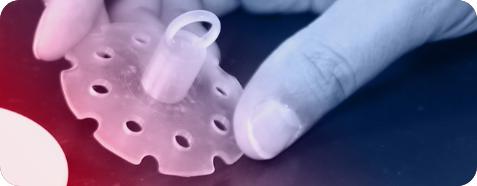
We have developed a smart pessary that features customized design for increased comfort and compliance and sensors to monitor vaginal health.
The Problem
Pelvic organ prolapse (POP) is one of the most common gynecological conditions worldwide, with epidemiological studies showing that 40–50% of women experience symptoms during their lifetime. In the United States alone, approximately 3.3 million women currently suffer from POP, and researchers estimate that 25% of U.S. women will experience symptoms at some point in their lives.
The pessary is the current first-line standard of care for POP, but existing products leave many women dissatisfied. Pessary compliance rates after one year range from only 50–80% due to discomfort, odor, insertion and removal challenges, and infections. These complications, combined with a lack of product innovation, have left many women undertreated or resorting to invasive surgery. Older patients, the at-risk population for POP and the most frequent users of pessaries, are particularly affected due to their heightened sensitivity to infection and difficulty maintaining traditional devices.
The Solution
The smart pessary was developed to address the shortcomings of existing products. It features integrated sensors that monitor vaginal health, an adaptive fit for enhanced comfort, and pelvic floor muscle stimulation to strengthen the pelvic floor. The smart pessary system also includes a companion mobile app and secure data platform for patients and providers. Together, these components enable personalized care, real-time health insights, and improved patient–provider communication. By combining preventative health features, comfort-focused design, and data-driven support, the smart pessary offers a modern, patient-centered solution for those managing POP.
The Opportunity
The global vaginal pessary market was valued at $450.8 million in 2024 and is projected to grow at a 4.6% CAGR, reaching $590.5 million by 2030. North America represents 41% of this market, driven by strong healthcare access and an aging population. Despite this growth, innovation in the pessary space has been limited, with most legacy designs continuing to overlook patient needs. Currently, no available or emerging product integrates digital features for preventative care or modernizes the pessary design for improved comfort.
Consumer trends strongly support this innovation. A survey of 2,000 consumers by Propel, a healthcare software company, found that 80% of respondents own at least one medical device, and one in four Americans have received a health alert from a personal device. Of those alerted, 76% received a subsequent diagnosis after consulting a physician, and 84% found the device data “extremely” or “very” valuable. The team’s product aligns with these shifting consumer preferences, empowering individuals with POP through greater awareness, data connectivity, and proactive care.
Status
We have developed prototype designs, gathered initial proof-of-concept data, and established a comprehensive two-phase product development plan. The project is a collaboration between the team and The University of Arizona’s academic clinical research team.
The team will lead the device’s design, prototyping, testing, and manufacturing, while the clinical research team will oversee medical trials to ensure the product meets patient needs and complies with all clinical and regulatory standards.
Meet the Team

Ravi Goyal MD, PhD
College Of Medicine - Tucson

Peter Nestler PhD
Tech Launch Arizona
Contact us today.

Check out more Medical Devices startups.
View All Startups & Inventions
An EVD or external ventricular drain, is a device used in neurosurgery to relieve intracranial pressure (ICP) resulting from a disturbance in cerebrospinal fluid (CSF) drainage due to tumors, cysts, bleeding, infection, hydrocephalus, and trauma. Existing EVD’s are manually assembled so as to insure appropriate drainage and ICP. Unfortunately, these systems are labor intensive and require full time monitoring by the medical staff.
Using today’s electronic devices and sensors, we have designed an EVD that can provide a completely autonomous solution while providing accuracy and repeatability.

University of Arizona researchers have developed an affordable precision brace technology for carpal tunnel relief, delivering targeted compression and customized comfort to transform hand health.

Occult Tethered Cord Syndrome (TCS) is a serious medical condition often detected before birth. If the spinal cord is not free it can result in several other urological problems and can result in a life-long disability.
We have developed a smart pessary that features customized design for increased comfort and compliance and sensors to monitor vaginal health.
